When people ask me why I feel such an affinity with crows, I always tell them the same thing; the ruling classes have always shot at us when we encroach on what they insist is their land.
And like the working-class, crows and other corvids have built the landscape around us yet it is kings and Lord who still try to take all of the credit.
When you walk in ancient oak woodlands or pine forests, do you ever stop to wonder just how it all got there in the first place? Or have you ever stumbled across a giant oak growing in an odd place, where there are no others, and been glad of it’s shade while hiking on a scorching hot day?
For this we can thank corvids. While many have tainted this group, particularly crows, ravens and jackdaws as ruthless killers of baby animals who need culling, without them we and other species wouldn’t have the landscape that has been a lifeline for many of us, particularly during the pandemic.

The reason for this is cacheing, which is like panic buying for birds and other animals, except it is infinitely more useful. Rather than eating foraged food straight away, cacheing involves storing it for times when food is more scarce. Acorns and pine nuts especially are favoured finds of all corvids. In the UK, jays in particular are partial to acorns and can carry about three acorns at a time in a pouch just under their tongue for transportation. Further afield, nutcrackers can carry over seventy pine nuts at once, and are directly responsible for huge forests across the world. Corvids will bury food, usually in the ground, in many different places but aren’t the best at remembering where they are, and when forgotten seeds then sprout in the spring, a new tree is born.
They are not the only animals to do this of course. Squirrels and other rodents are famous for amassing food stores, but scatter hoarding, which is the behaviour seen in corvids will disperse seeds to wider areas that the squirrels cannot.
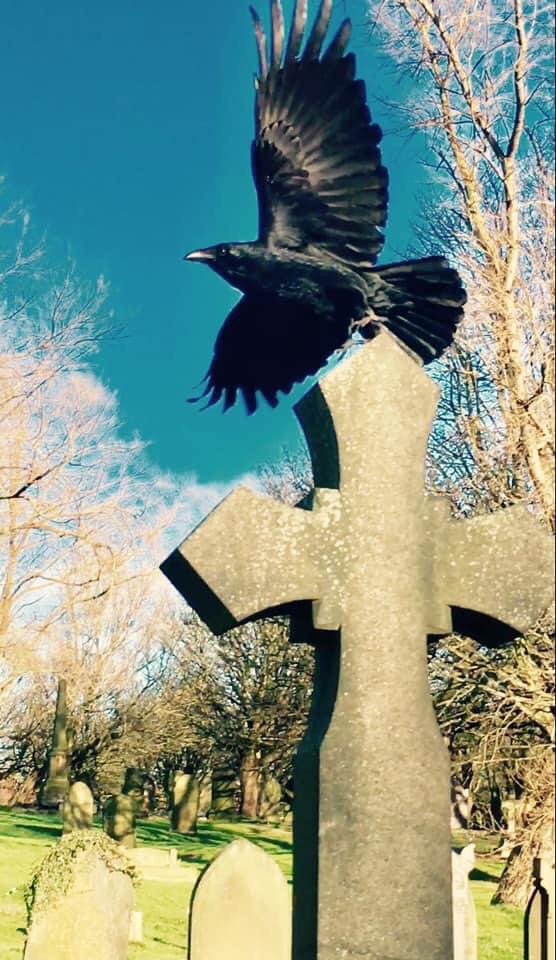
At the graveyard, there is never a dull moment with a variety of cacheing creatures. The crows skulk off to the darkest corners of the cemetery, trying to find the most ingenious and tricky places they can hide their loot. The squirrel is too meticulous, but not always as cautious about the locations of his pantries. I watched him for a good ten minutes once, diligently covering his monkey nut, and patting dirt and leaves down with his little hands before scurrying off for more, when a magpie who had sat above him watching all of this then swooped down and retrieved it for herself in about three seconds. The Black Bloc are now trusting enough to cache in front of me now they are satisfied I will not betray the location or steal food I gave them in the first place, and they will use a variety of grasses and mosses to conceal it from the gulls.
Raids from other animals aside, scatter hoarding is the reason we still have anything resembling a green and pleasant land, despite the best efforts of the Industrial Age and property developers. Though considered a menace to smaller birds, the crows have a perfectly symbiotic relationship with their environment. The forests provide their nourishment and shelter, and these birds in turn help plant new habitats where more flora and fauna will thrive.
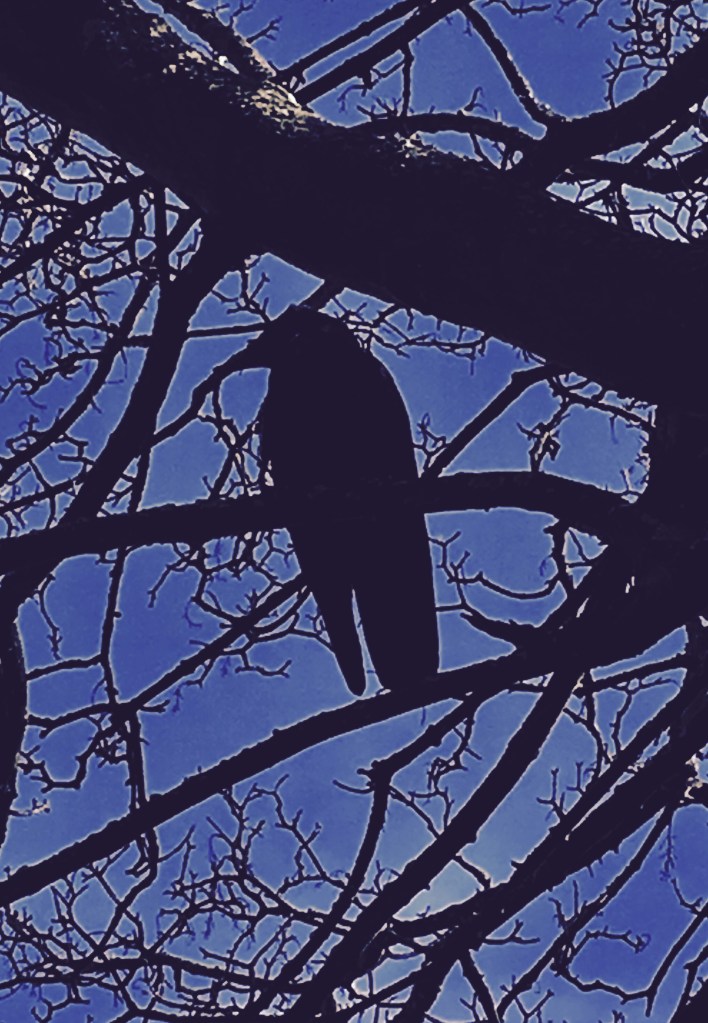
It is not them who threaten the future of more socially aesthetically pleasing garden birds. A couple of streets down from me, a patch of wasteland that had grown wonderfully wild has suddenly, without notice, transformed into a building site for an expensive new retirement complex. Over the years I have seen this serve as both a nursery for fledgling starlings hiding from the kestrel as they wait for their parents to return, and a cache ground for a pair of crows who are now watching in bewilderment as a tiny piece of land they had managed to cling on to is being taken away.
Crows are one of the most resilient species, and they have constantly adapted to the way we have changed the land. They are masters of rewilding and recycling, yet live with a savage and cataclysmic notoriety more suited to the unsustainability of consumerism.
 an-anarchy-of-crows.com